
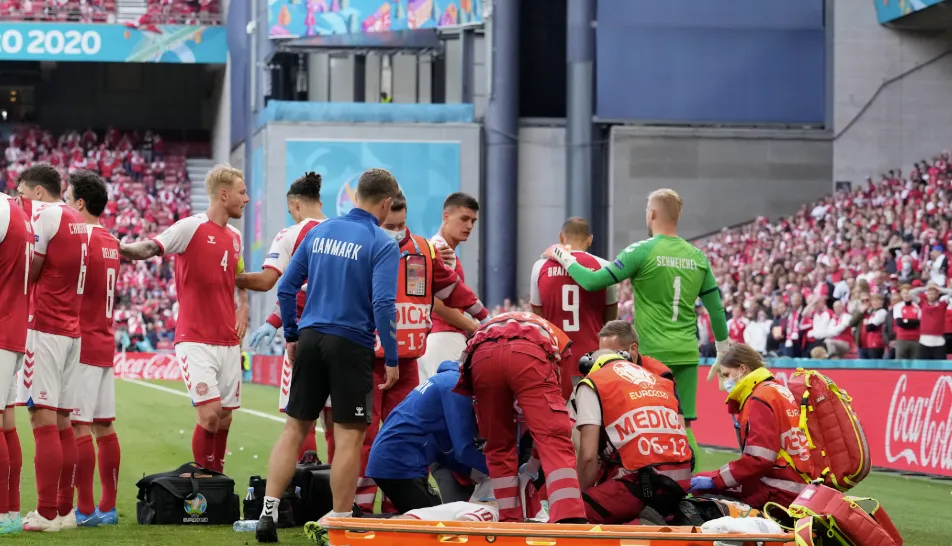
It was a moment that stopped the world. When Christian Eriksen collapsed on the pitch during Denmark’s Euro 2020 opener against Finland, the football community held its breath. What followed was not just a miracle of medical response but a seismic shift in how football administrations think about player safety. The Danish Football Association (DBU) has since emerged as a leading voice demanding permanent changes to UEFA’s emergency procedures, turning a moment of profound crisis into a catalyst for systematic reform. With platforms like Baji Live closely tracking these developments, the story of Eriksen’s collapse continues to reshape the rules of the beautiful game.
The Moment That Changed Everything
A Sudden Silence in Copenhagen’s Stadium
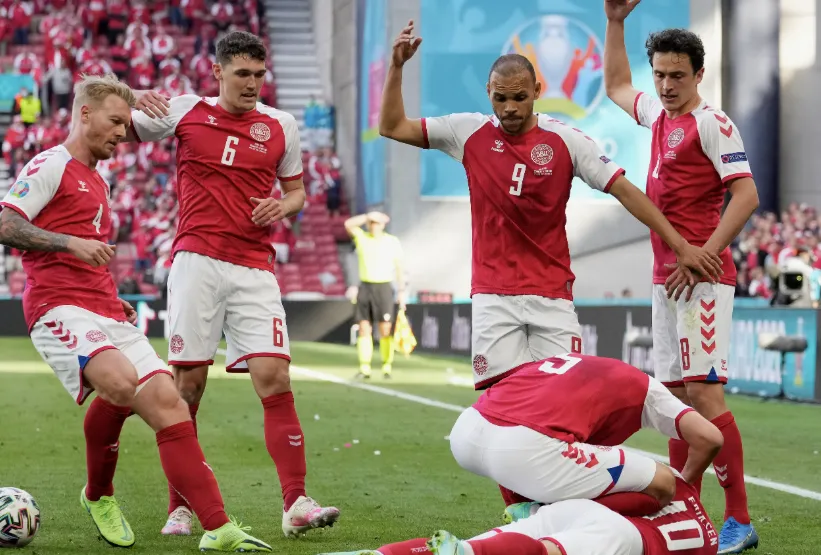
On June 12, 2021, the world witnessed something no one was prepared for. Christian Eriksen, the brilliant Inter Milan playmaker, fell to the ground without any contact in the 43rd minute of the match. The ball had just been played in his direction when he suddenly collapsed, his body motionless on the turf. What happened next was a masterclass in emergency response.
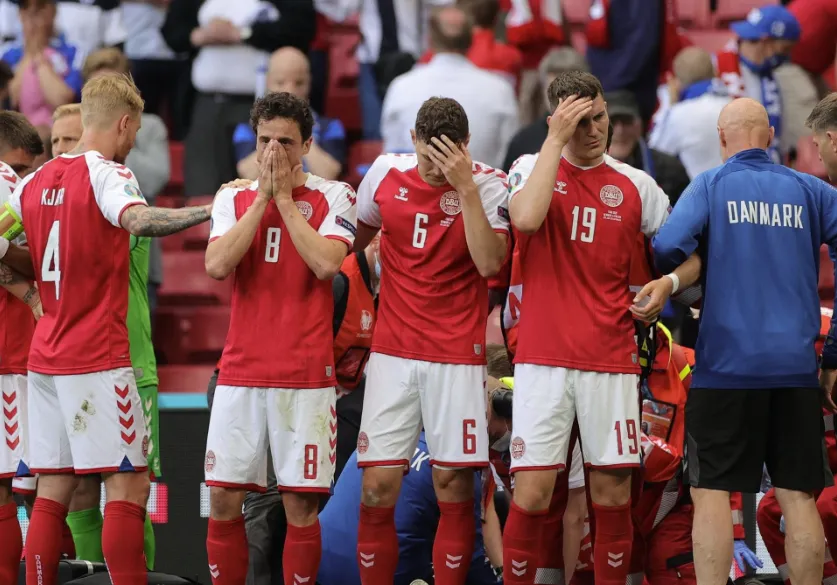
Medical teams sprinted onto the pitch within seconds. Captain Simon Kjær and goalkeeper Kasper Schmeichel immediately took charge, protecting Eriksen’s dignity while ensuring medical staff had complete access. The stadium fell into an eerie silence, broken only by the desperate pleas of players and the coordinated commands of medical professionals. Those 13 minutes of CPR and defibrillation felt like an eternity.
The Miraculous Revival
Thanks to the immediate application of a defibrillator and professional CPR, Eriksen’s heart was restarted on the pitch. He was stabilized and rushed to Rigshospitalet in Copenhagen. Hours later, the world received the news it desperately wanted: Christian Eriksen was awake and speaking. The subsequent days revealed that Eriksen had suffered a cardiac arrest during the match, a condition that proved to be a turning point not just for the player but for football’s entire approach to medical preparedness.
Denmark FA’s Call for Change
Specific Protocol Demands
Following this harrowing experience, the DBU has been steadfast in its push for procedural changes at UEFA level. The association has formally requested that UEFA establish mandatory cardiac screening protocols for all professional players participating in UEFA competitions. This goes beyond the existing recommendations, demanding binding requirements rather than voluntary guidelines.
The DBU has also called for the universal presence of automated external defibrillators (AEDs) at every UEFA-sanctioned match venue, with staff trained specifically in their use. During the Eriksen incident, the quick availability of this equipment proved critical, but the association argues that this cannot be left to chance or individual stadium management decisions.
A Unified European Voice
Danish FA officials have been working behind the scenes to build a coalition of support among other European football associations. Dr. Søren Møller, a sports medicine specialist consulted by the DBU, stated, “What happened with Christian was a wake-up call, but wake-up calls only matter if they lead to action. We cannot assume that every player will be as fortunate. The protocols need to be standardized across all levels of professional competition.”
This sentiment echoes what many medical professionals have observed: that cardiac emergencies in athletes are more common than the public realizes, and the difference between life and death often comes down to the speed and quality of the initial response.
The Broader Impact on Medical Preparedness
Redefining Emergency Action Plans
In the aftermath of Eriksen’s collapse, media outlets like Baji Live have documented how medical protocols across Europe have been dramatically enhanced. UEFA has since mandated that all medical teams at major tournaments undergo specific training for cardiac emergencies. This includes simulated drills where the defibrillator must be on the pitch within 60 seconds of a player collapsing.
One of the most significant changes has been the repositioning of medical equipment. Before Eriksen’s incident, defibrillators were often kept in medical rooms or paramedic stations, sometimes requiring significant time to retrieve. Now, they are positioned pitch-side at major competitions, ready for immediate use.
Psychological Support for Players
Beyond the medical hardware, the incident highlighted the emotional trauma experienced by teammates and opponents. Both Denmark and Finland players received counseling following the event. The DBU has since advocated for mandatory psychological support services at UEFA tournaments, recognizing that witnessing such an event can have lasting mental health implications.
Professor Henrik Andersen, a psychologist who worked with the Danish squad after the incident, notes, “The players on the pitch that day didn’t just lose a teammate; they confronted mortality in real-time. The image of Simon Kjær shielding Christian’s body will stay with them forever. We need to recognize these moments as traumatic events requiring professional intervention.”
Christian Eriksen’s Remarkable Journey
Courageous Recovery and Return
Christian Eriksen’s personal story is one of extraordinary resilience. After being fitted with an implantable cardioverter-defibrillator (ICD), he was unable to continue playing for Inter Milan due to Serie A regulations. This setback could have ended his career, but Eriksen chose a different path.
His journey back to professional football has been nothing short of inspiring. After training with former club Odense Boldklub, Eriksen signed with Brentford in January 2022, making his Premier League debut later that season. The emotional return to top-flight football was completed when he scored for Denmark against Serbia in his first international match since the collapse, a moment that reduced fans and players alike to tears.
A New Chapter at Manchester United
The remarkable story continued as Eriksen joined Manchester United in July 2022, demonstrating that elite performance levels are achievable even after cardiac arrest. His technical brilliance has not diminished; if anything, his tactical intelligence seems sharper, as if the pause in his career gave him a new perspective on the game.
Speaking about his return, Eriksen reflected, “I spent a lot of time thinking about whether I could play again. But once the doctors cleared me, I never doubted it. Football is what I love, and I am grateful for every single match since that day.”
The Evolution of UEFA’s Response
Immediate Changes and Long-term Reforms
UEFA’s initial response to the incident was swift but primarily focused on the immediate aftermath. The organization reviewed its medical protocols and published updated guidelines within weeks of the event. These included recommendations for enhanced cardiac screening and mandatory defibrillator access at all UEFA competition matches.
However, the DBU’s push for formal procedural changes represents the next logical step. Currently, UEFA’s medical recommendations are advisory in nature, with individual associations and clubs responsible for implementation. The Danish FA wants binding regulations that carry consequences for non-compliance.
Data Collection and Research Initiatives
Another area of focus has been data collection. UEFA has invested in research initiatives tracking cardiac incidents in football, aiming to better understand risk factors and prevention strategies. The database created partially in response to Eriksen’s case already contains thousands of medical records from participating clubs and national teams.
Dr. Michael Rask, a cardiologist who has analyzed this data, explains, “What we are learning is that cardiac events in athletes are not as rare as previously believed. The key is early detection and preparation. Every second matters, and our research shows that venues with comprehensive emergency plans see dramatically better outcomes.”
Lessons for the Global Football Community
The Importance of Preparation
One of the most important lessons is that preparation saves lives. The medical team at the Denmark-Finland match had practiced exactly this scenario. Their rehearsed response allowed them to begin CPR within seconds, apply the defibrillator in under a minute, and coordinate effectively with hospital staff. This level of preparation must become universal.
Football clubs around the world have since audited their own medical protocols. Many have installed additional defibrillators, trained more staff in basic life support, and revised emergency action plans. The ripple effect extends beyond professional football to amateur leagues and youth academies.
Removing the Stigma Around Medical Discussions
There is also a cultural shift occurring in football. Previously, discussions about cardiac health were often avoided due to concerns about player marketability or career prospects. Eriksen’s openness about his condition has helped normalize these conversations. Players are now more willing to undergo comprehensive cardiac screening and to disclose any symptoms they might experience.
The DBU’s advocacy has played a key role in this cultural change, encouraging transparency and proactive health management among Danish players at all levels. This approach protects not just the athletes but also the integrity of the sport.
The Future of Football’s Medical Standards
Expected UEFA Procedure Revisions
Based on current developments, UEFA is expected to revise its medical procedures in the coming seasons. The DBU’s proposals likely to be adopted include:
- Mandatory cardiac screening every two years for all UEFA competition players
- Required presence of at least one AED within 200 meters of every pitch
- Annual emergency response drills for all competition venues
- Standardized incident reporting protocols for cardiac events
These changes would represent a significant step forward, creating a baseline standard that all UEFA members must meet. The hope is that this will serve as a model for other confederations and eventually for domestic leagues worldwide.
A Lasting Legacy
Christian Eriksen’s collapse was a terrifying moment that could have ended in tragedy. Instead, it became a story of survival, courage, and positive change. The DBU’s campaign for procedural reforms ensures that Eriksen’s experience will save other lives in the future.
As Baji Live continues to cover this evolving story, one thing is clear: the legacy of that June evening in Copenhagen extends far beyond the final result of a football match. It has forever changed how the sport approaches medical emergencies, creating a safer environment for every player who steps onto the pitch.
Final Thoughts
The Danish FA’s push for UEFA procedure changes following Christian Eriksen’s collapse represents more than just bureaucratic reform—it is a commitment to player safety that honors the resilience shown by Eriksen himself. Baji Live believes these developments deserve close attention from every football fan.
What are your thoughts on the changes implemented since Eriksen’s incident? Have you noticed improvements in medical preparedness at matches you attend? We invite you to share your experiences in the comments below. The conversation about player safety is far from over, and your voice matters in shaping the future of football.
